




Full resource lifecycle
Create, read, update, patch, delete, and retrieve history for supported FHIR R4 resources through one consistent API.
FHIR R4 · Clinical data infrastructure · Analytics-ready
TietAI FHIR Server gives health platforms a standards-compliant API layer to store, validate, search, version, and exchange clinical resources.
It connects EHR feeds, HL7 transformations, agentic pipeline writes, applications, analytics, OMOP mapping, and EHDS workflows through one governed FHIR foundation.
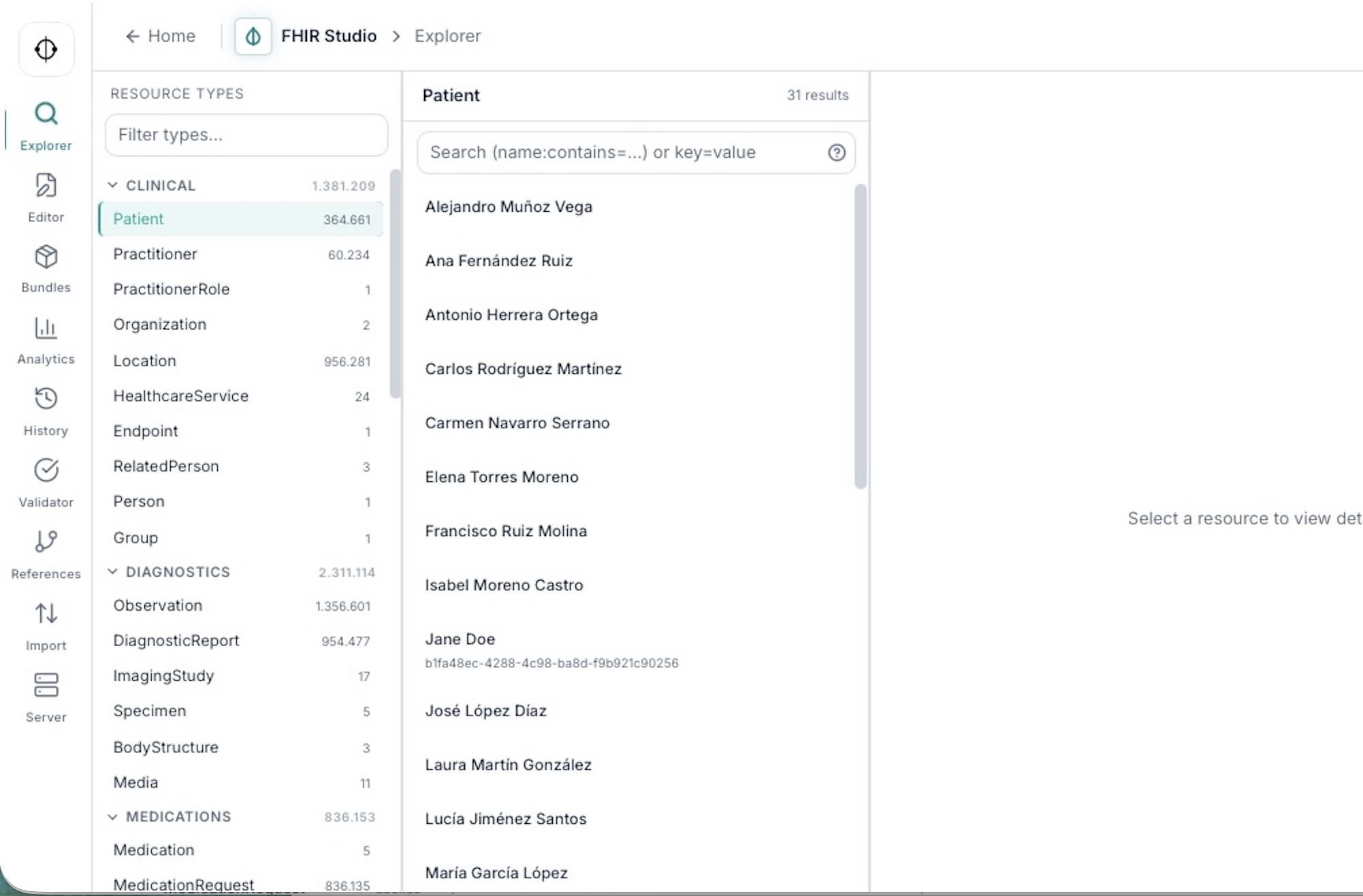
15+ resources
patients, encounters, observations, claims, documents, and more
Advanced search
include, reverse include, chained, modifier, and composite queries
FHIR Bundles
atomic transaction and batch processing
SQL-on-FHIR
direct analytics over governed FHIR resources
The server provides the core FHIR operations needed by health apps, integration services, and AI pipelines without forcing every team to rebuild the same infrastructure.
Create, read, update, patch, delete, and retrieve history for supported FHIR R4 resources through one consistent API.
Support patient demographics, providers, organizations, encounters, conditions, observations, medications, allergies, procedures, reports, immunizations, care plans, documents, coverage, and claims.
Expose the search patterns clinical products need, including includes, reverse includes, chained parameters, modifiers, date ranges, and paginated results.
Process batch and transaction Bundles so multi-resource writes can move together with predictable success or rollback behavior.
Keep a traceable history of resource changes so applications can inspect previous versions and understand how clinical records evolved.
Validate incoming resources against FHIR R4 structure, required fields, references, and vocabulary expectations before they become operational data.
Product teams get standards support, isolation, validation, observability, and performance controls without exposing infrastructure complexity to users.
Separate data by organization across read, write, search, history, and Bundle operations for multi-tenant clinical deployments.
Connect code validation and ontology lookup services so clinical concepts can be checked before they flow downstream.
Keep resources in a queryable FHIR data layer that supports SQL-on-FHIR views and downstream reporting.
Track request volume, latency, resources created or updated, search behavior, Bundle throughput, validation errors, and active connections.
Use indexed resource storage and compiled search queries so common clinical lookups stay responsive as datasets grow.
Tune Bundle size, search count, include depth, validation, history, caching, and connection pools for each deployment profile.
The FHIR Server is designed to sit between operational systems, transformation services, product frontends, agentic pipelines, analytics, OMOP, and EHDS services.
Expose a stable FHIR R4 endpoint for EHR systems, internal applications, and frontend clinical data browsers.
Receive normalized FHIR output from integration pipelines that transform HL7 and other hospital messages.
Let AI workflows write structured FHIR resources back into the governed clinical data layer.
Feed analytics services that map FHIR resources into OMOP CDM for research, real-world evidence, and secondary use.
Provide a standards-native source for European data space workflows, catalogs, distributions, and governed sharing.
EHR systems, integration pipelines, applications, and agents write FHIR R4 resources through the gateway. The server validates, stores, indexes, versions, and isolates those resources by organization.
From there, product teams can search records, process transactions, power clinical apps, run SQL-on-FHIR analytics, and send curated data into OMOP or EHDS workflows.
Give care apps, integration teams, AI agents, analytics, and governance workflows the same standards-native clinical data layer.