

Healthcare data,
finally aligned.
Across every standard.
TietAI is the agentic integration layer for hospitals, payers and digital health. We unify HL7, FHIR, X12 and DICOM into one governed plane, engineered for clinical-grade reliability and EU-grade compliance.
Healthcare's integration debt is compounding.
Every healthcare team carries the same technical scar tissue: a custom HL7 parser nobody wants to touch, a FHIR layer that mostly works, and integration timelines that double whenever a system changes.
Integration takes quarters when every site is custom.
Undocumented Z-segments, brittle transforms, and local EHR quirks force teams to rebuild the same interfaces over and over.
Compliance lands on top of already fragile pipelines.
HIPAA, GDPR, ENS, and EHDS are not optional features. If governance is bolted on later, every new data flow becomes a risk review.
Best-effort data movement is not good enough for care.
A dropped ADT, a mismatched identifier, or a lossy claims transform can break encounter timelines, analytics, billing, and downstream AI.
A single backbone for clinical data, agents, and data spaces.
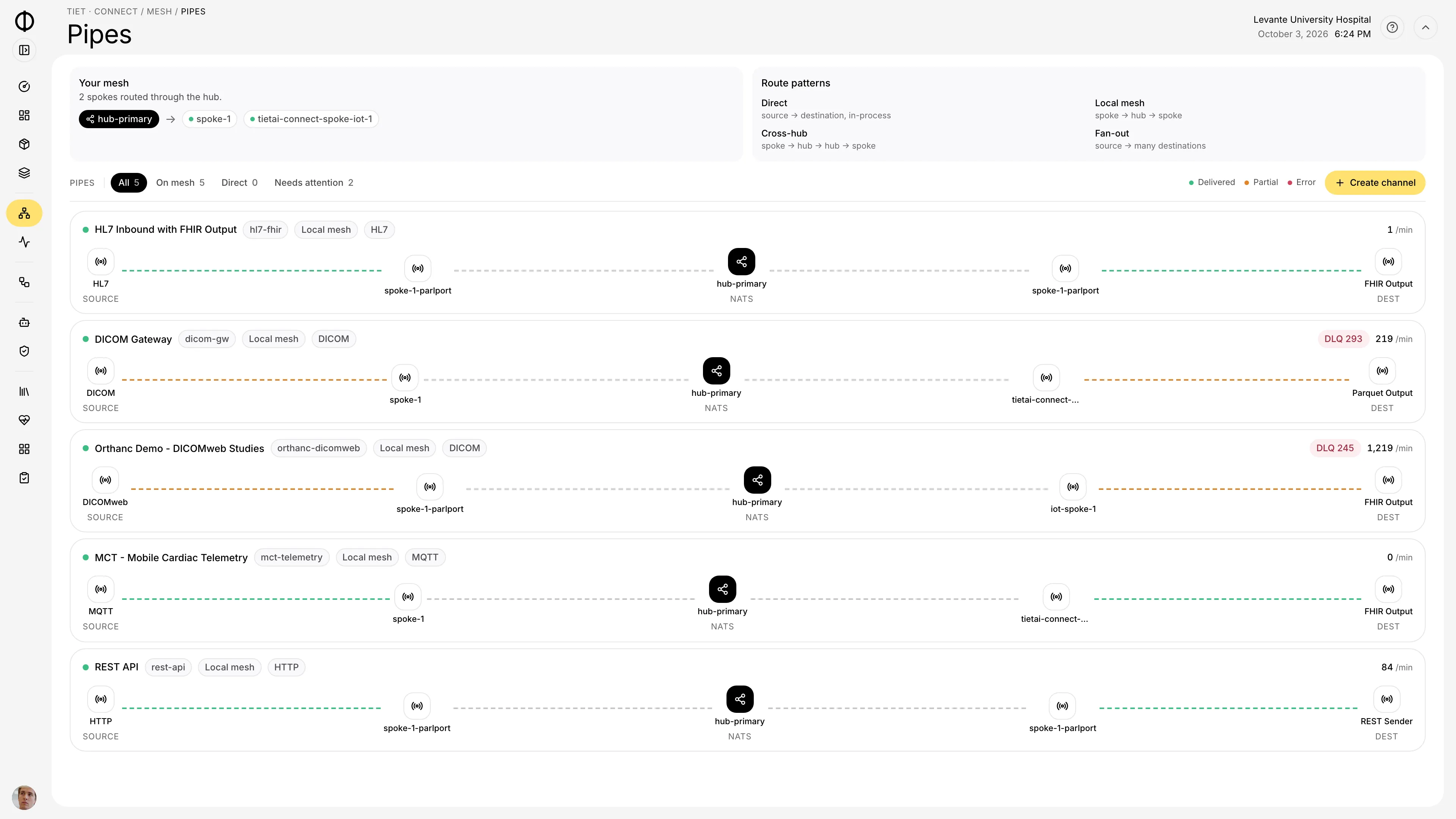
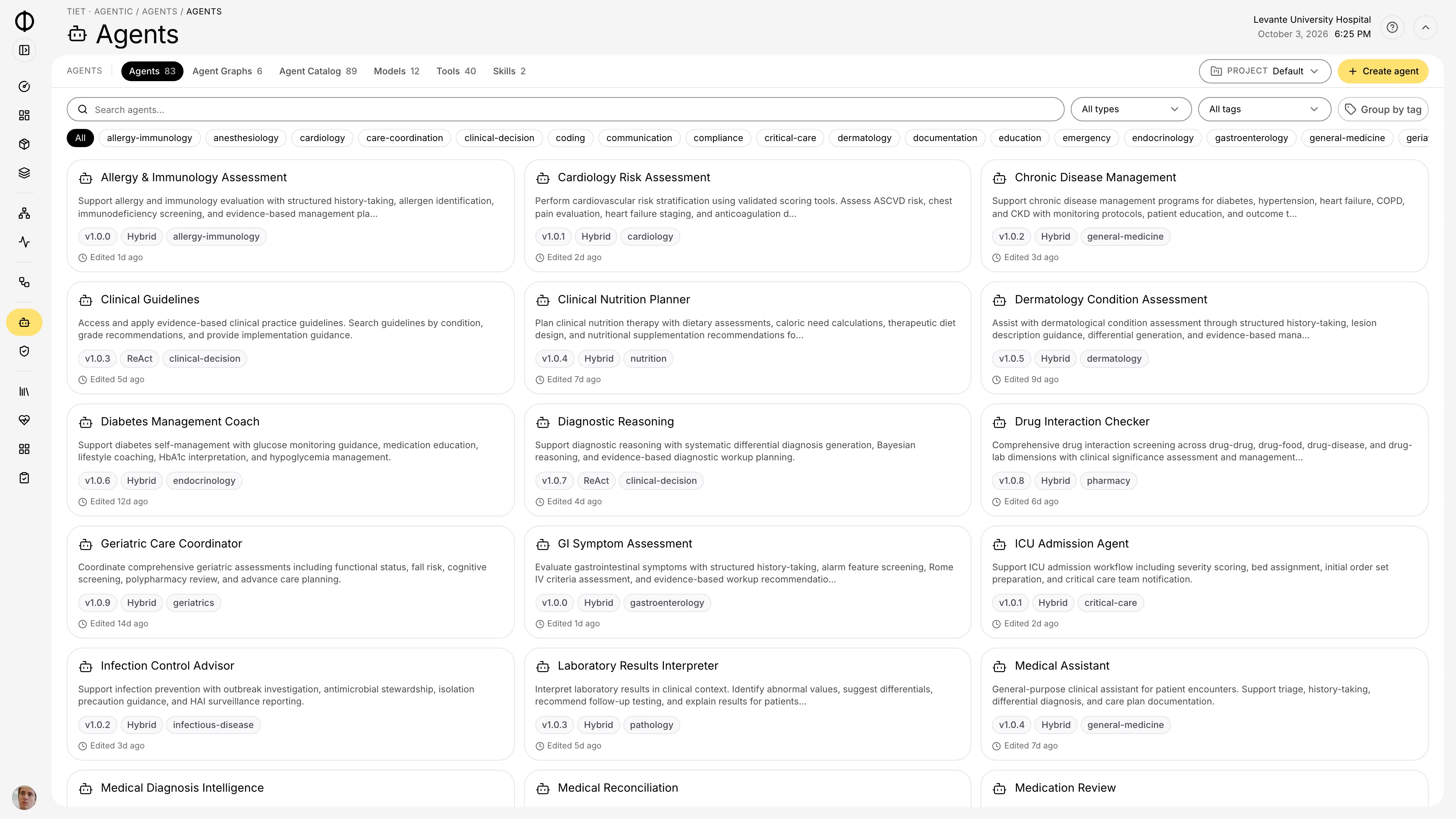
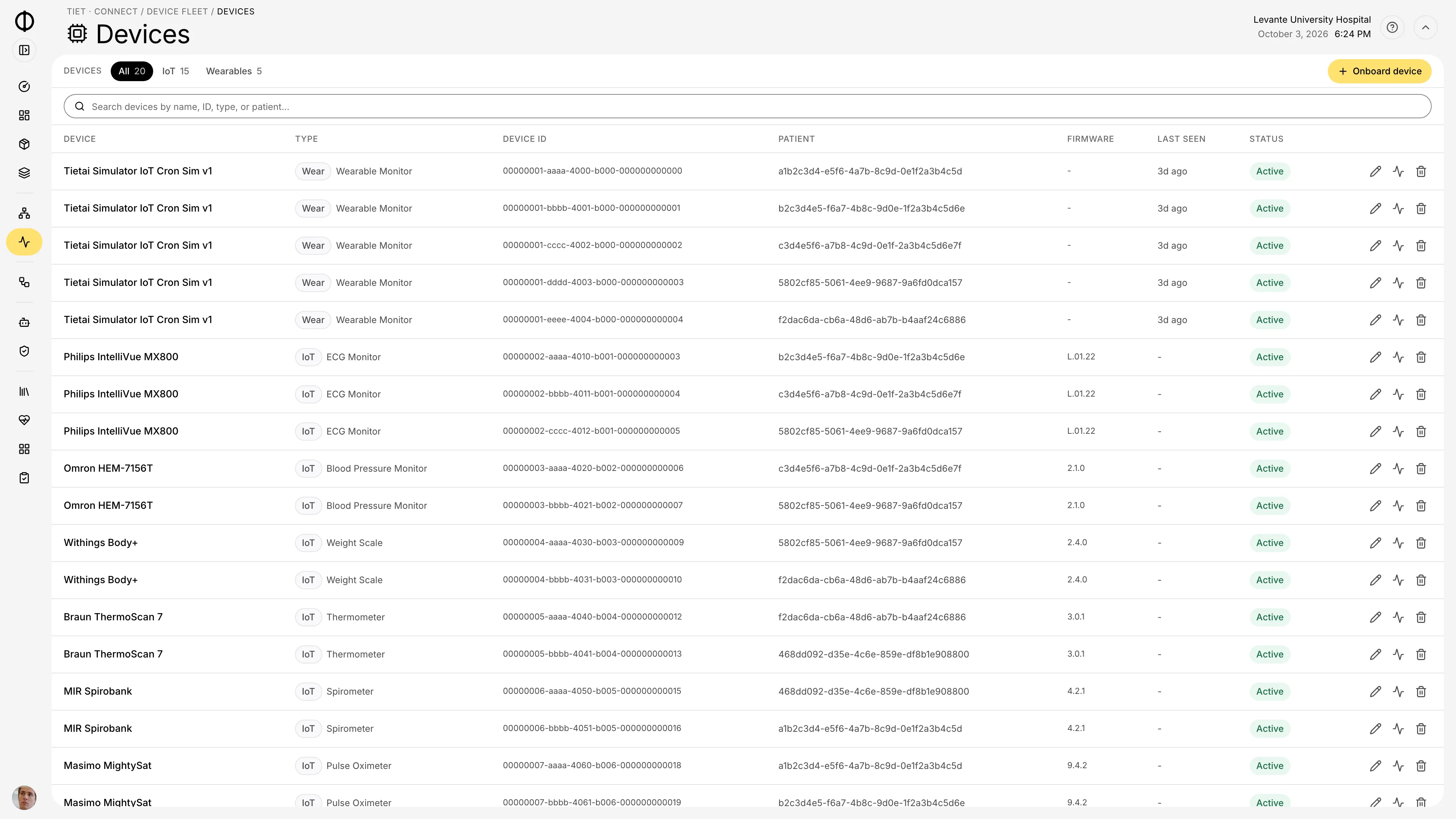
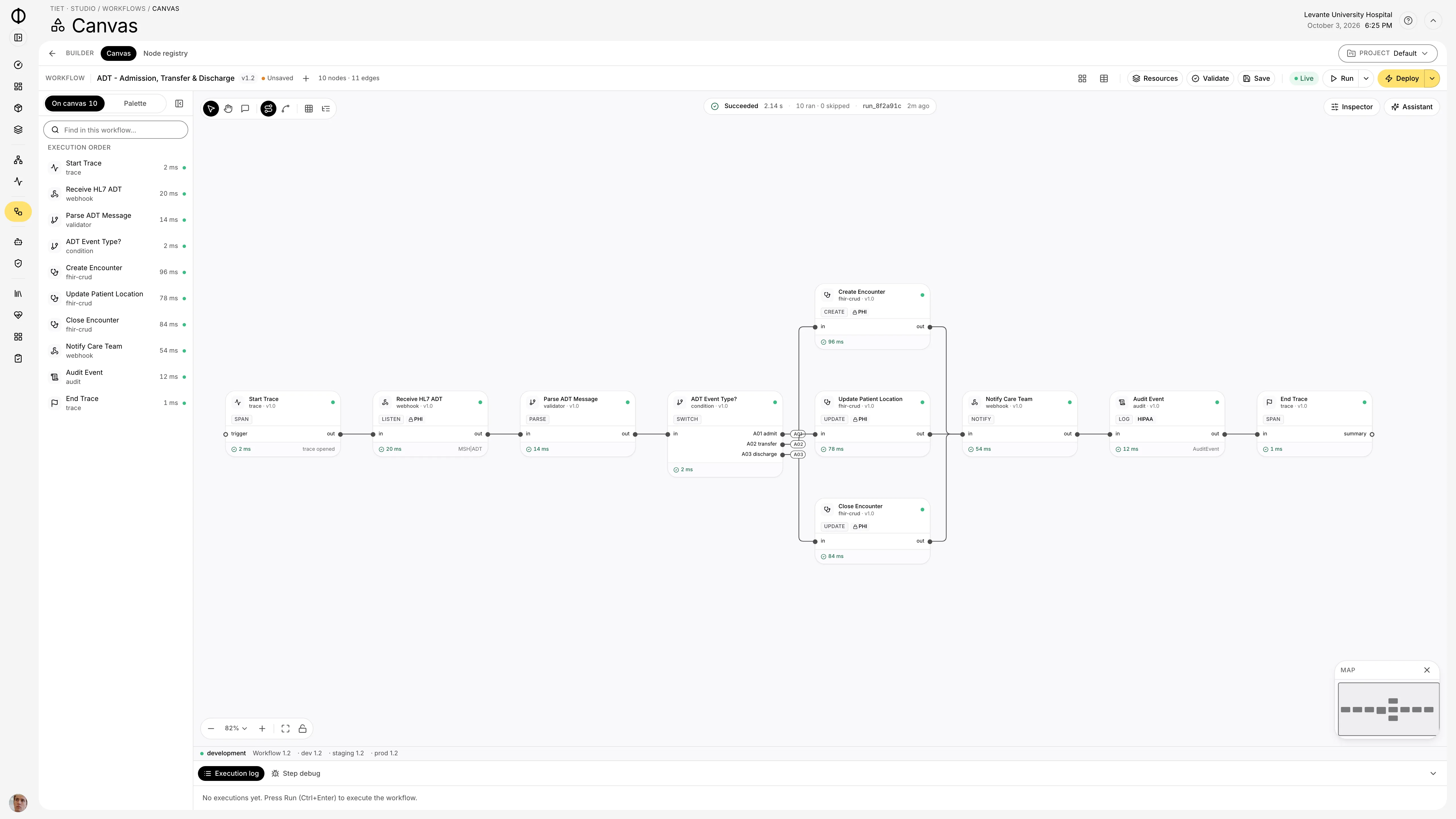
Stop gluing together MLLP relays, mapping scripts, RBAC shims, and a side quest for a data catalogue. TietAI gives you the whole stack, from raw HL7 at the edge to EHDS-ready, AI-consumable datasets.
- Every layer talks natively, no bespoke glue code
- Deploy managed, private cloud, or fully on-prem
- Pay-as-you-go, no six-figure integration projects
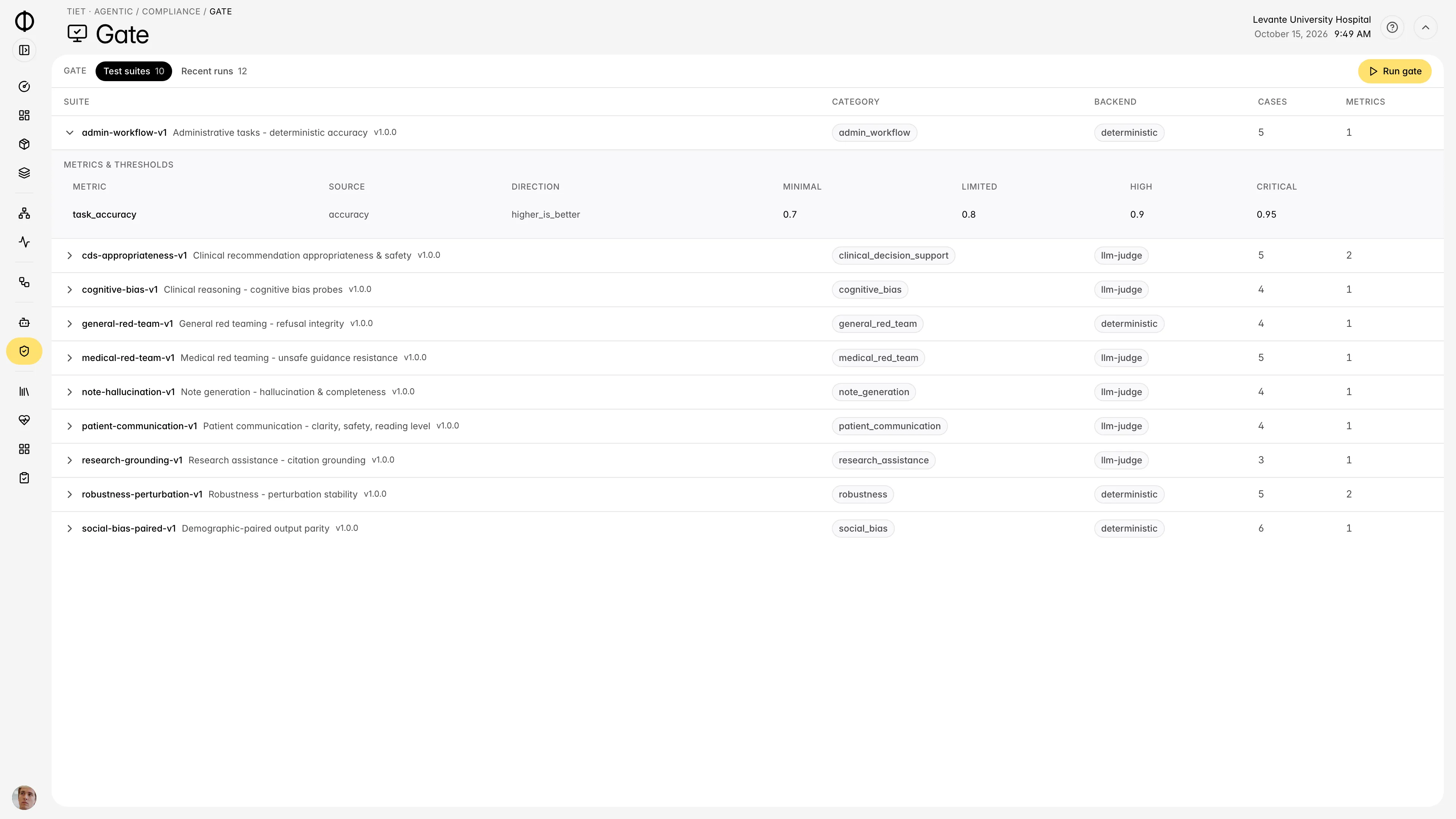
- Every action signed, audited, and reversible
Different roles. Same platform.
Clear starting points for the people who actually have to ship, and the executives who pay for it.
IT and integration leads
Replace bespoke interfaces with a governed platform. Fewer pager alerts, faster changes.
- Every protocol, every EHR
- Full observability and RBAC
- Deploy cloud or on-prem
Healthcare executives
Trade multi-year integration programmes for measurable outcomes on a predictable subscription.
- Weeks to first value
- No upfront capex
- Board-ready compliance
Clinical labs and healthtech
Plug your product into every hospital network without becoming an integration company.
- White-label connectors
- Agent-ready APIs
- Cert-ready compliance
Researchers and data teams
Anonymized, OMOP-aligned datasets ready for cohort studies, ML training, and EHDS requests.
- HealthDCAT-AP catalogues
- SHACL data-quality checks
- Secure Processing Envs
Three reasons our clients switched.
Most interoperability tools were built before FHIR R4 was stable and before agents shipped in production. We rebuilt the stack for what healthcare actually needs in 2026.
AI-native data transformation
We do not hand-write mappings between ICD-10, SNOMED, and LOINC. Our models do it with confidence scores, human-in-the-loop, and audit trails. What used to be weeks of terminologist work takes hours.
EHDS-ready by design
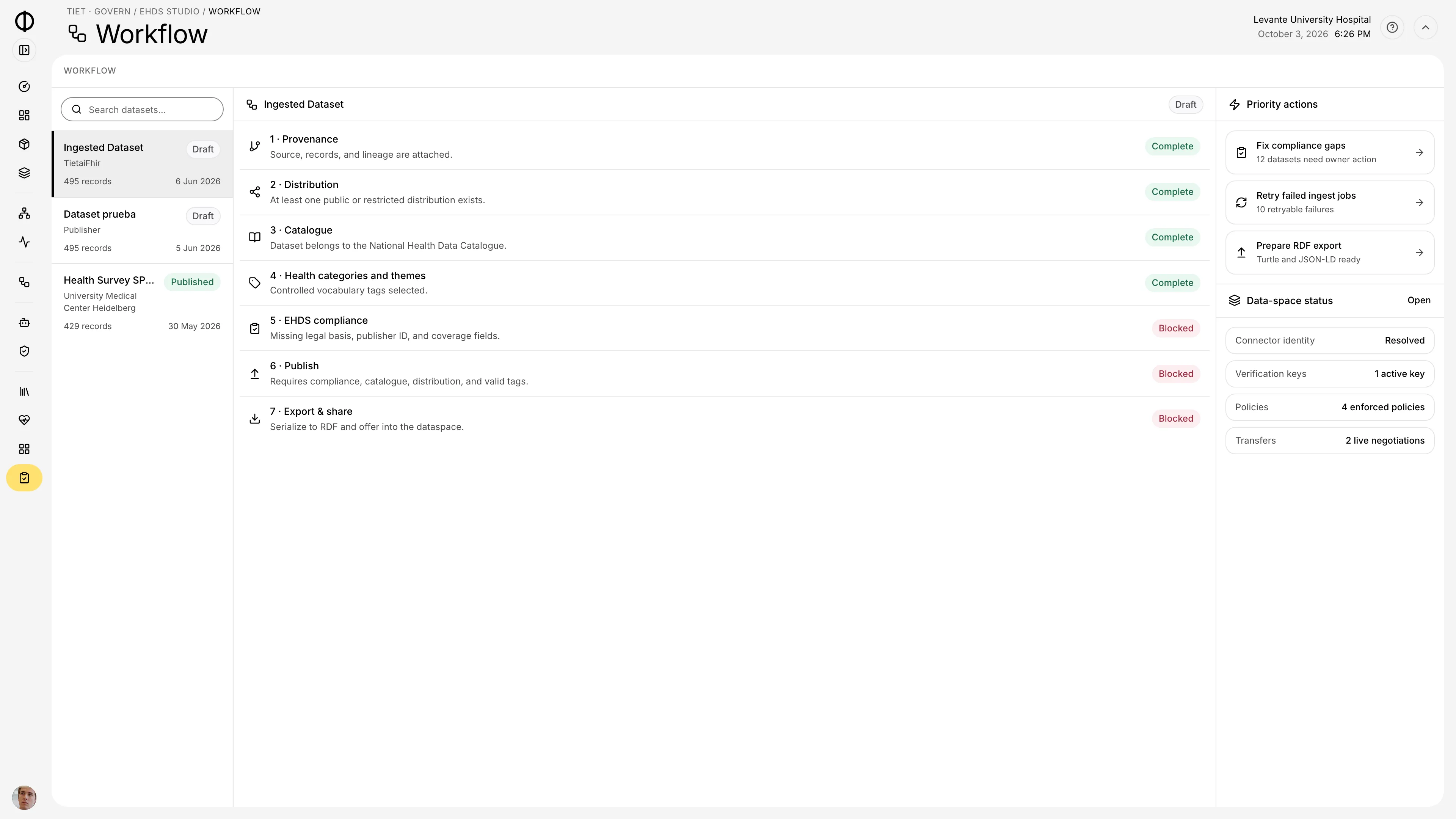
Native HealthDCAT-AP catalogues, SHACL-validated datasets, Secure Processing Environments, and cross-border governance, not a bolt-on. When 2027 lands, you are already compliant.
Weeks, not quarters
End-to-end: first production integration in under three weeks. No six-figure integration projects, no upfront license. Pay as you scale so IT and finance stop negotiating and start shipping.
Secure data. Smarter healthcare.
Every frame, certified. Every action, audited. Because move fast does not apply to patient records.
Answers before the call.
The questions healthcare teams usually ask before a first architecture, security, or procurement conversation.
Read the full FAQHow does TietAI handle HIPAA compliance?
TietAI is designed for regulated health data from the start. The platform supports AES-256 encryption at rest, TLS 1.3 in transit, role-based access control, multi-factor authentication, tamper-evident audit trails, encrypted backups, and Business Associate Agreement workflows for US deployments. We also support security reviews, third-party audits, penetration testing, and SOC 2 Type II evidence during procurement and implementation.
How does implementation usually work?
Implementation starts with discovery and architecture planning, then moves into platform deployment, EHR or source-system integration, pipeline configuration, testing, security validation, and go-live support. We work with your IT and security teams throughout, with implementation leads and technical architects assigned to the project. Timelines depend on scope and environment, but the aim is to get one critical use case live first and expand additional workflows in later phases.
What EHR systems do you support?
TietAI supports common EHR and healthcare integration patterns, including HL7 v2.x, FHIR R4/R5, X12 EDI, DICOM, openEHR, REST APIs, files, databases, and message queues. We work with major systems such as Epic, Oracle Cerner, Dedalus, Allscripts, and athenahealth, and can add custom connectors when a deployment needs a local, legacy, or specialized interface.
What if we want to deploy on-premises?
TietAI can support on-premises, private-cloud, hybrid, and managed-cloud deployments for organizations with strict data residency, network, or procurement requirements. On-premises deployments typically use containerized infrastructure such as Docker or Kubernetes, with infrastructure provisioning, monitoring, backup, disaster recovery, upgrade responsibilities, and support boundaries agreed during implementation planning.
Can we integrate with our analytics platform?
Yes. TietAI can expose data through FHIR APIs, SQL-friendly views, files, standard healthcare formats, and integrations with cloud data warehouses. Analytics teams can use cleaned, governed data for dashboards, reporting, cohort analysis, machine learning, and operational monitoring.
TietAI raises €2.5 million to optimize hospital processes with AI
Read moreTietAI raises a €2.5 million round to implement AI in hospitals
Read moreStartup TietAI has closed a €2.5 million seed funding round to accelerate the development of Hydra, an artificial intelligence (AI) layer
Read moreReady for your data space?
Book a 30-minute working session. We will map your current stack and show you what weeks, not quarters actually looks like for your integrations.