Handoffs by hand
Teams copy, check and reconcile the same case across systems, inboxes and spreadsheets.

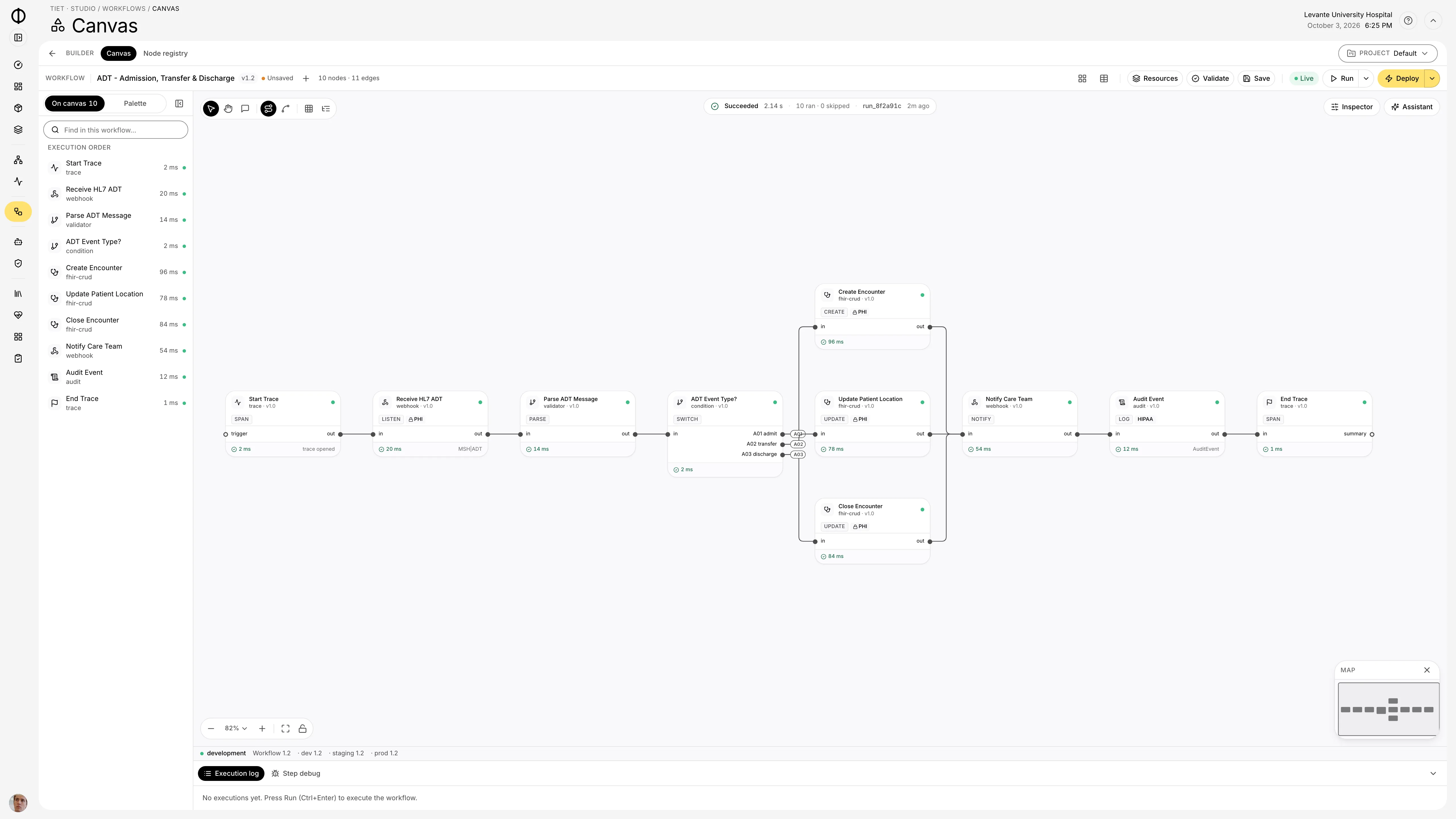
Teams copy, check and reconcile the same case across systems, inboxes and spreadsheets.
Scripts break when a screen or format changes, and generic AI pilots can't reach production systems.
Every site runs the process differently, and approvals and exceptions are hard to show later.
Wire triggers, standards, transforms, agent, retrieval and audit steps on one canvas. Workflows act on live, normalised data from Tiet · Connect.
Read the docs (opens in a new tab)

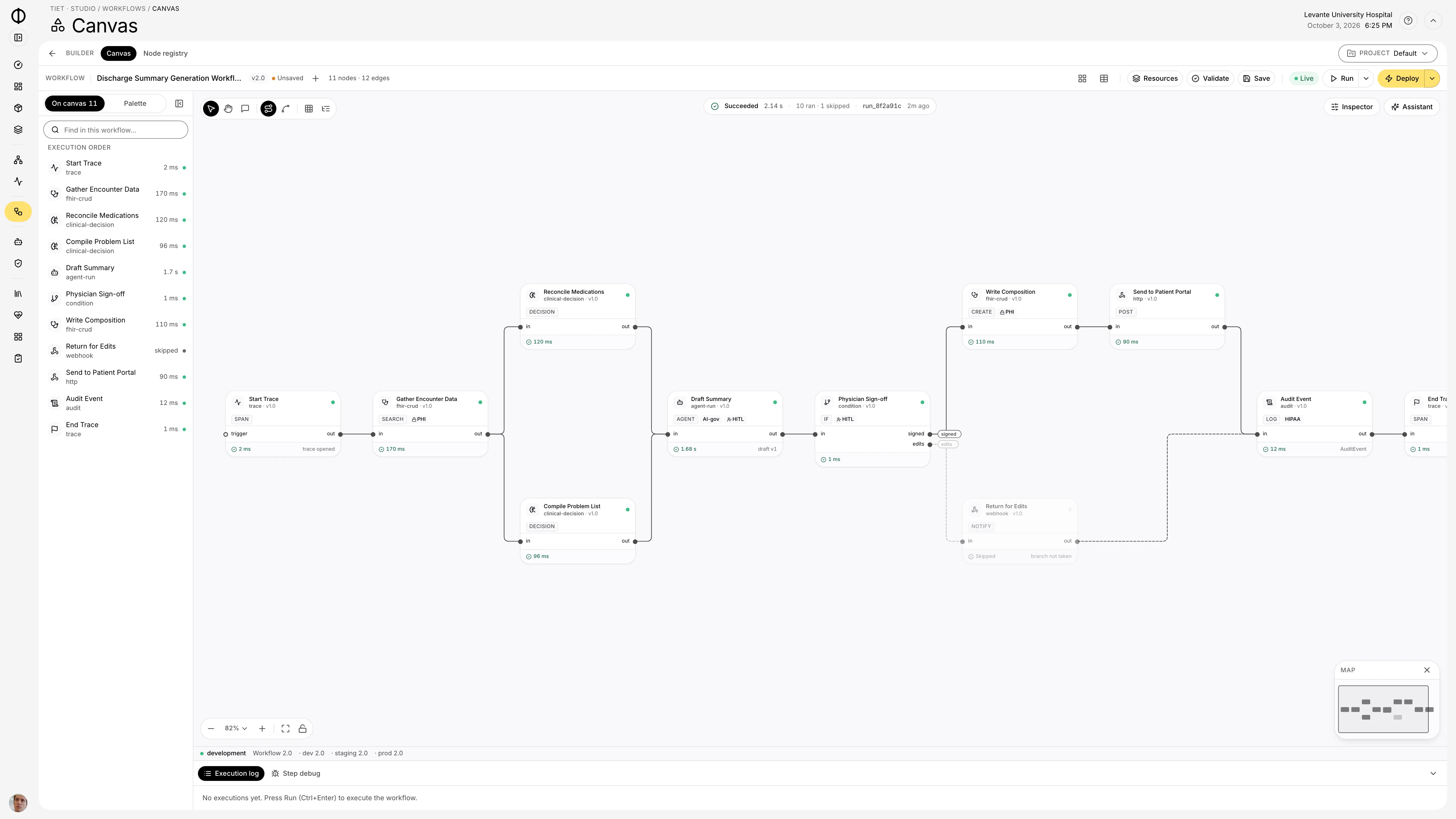
Extraction, validation, reasoning, export and review-gate steps in 16 categories, plus documented reference pipelines to start from.
Read the docs (opens in a new tab)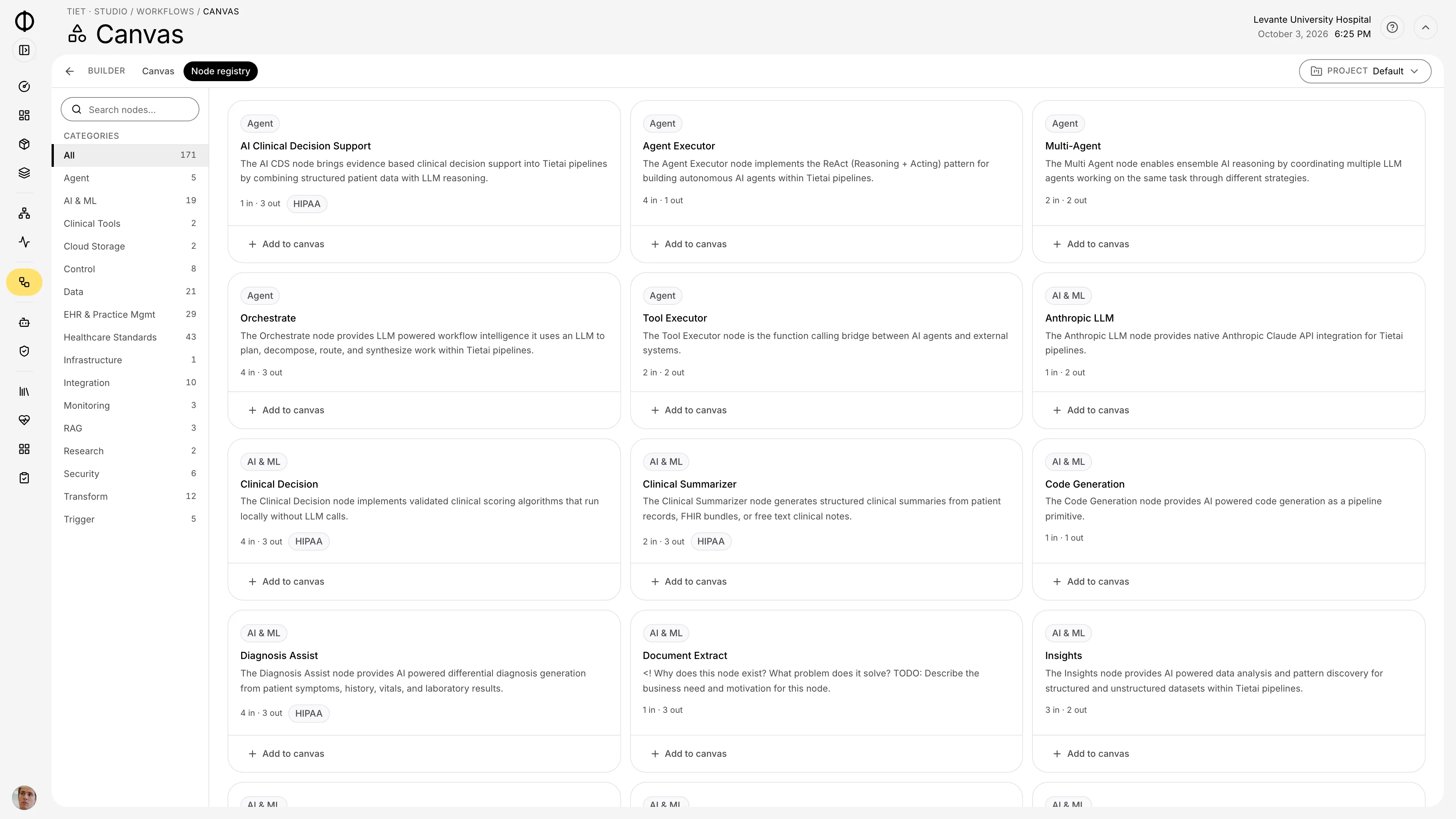
Each workflow moves from draft to review to approved, with node tests, safety and policy checks and a changelog. The version you tested is the one that runs.
Read the docs (opens in a new tab)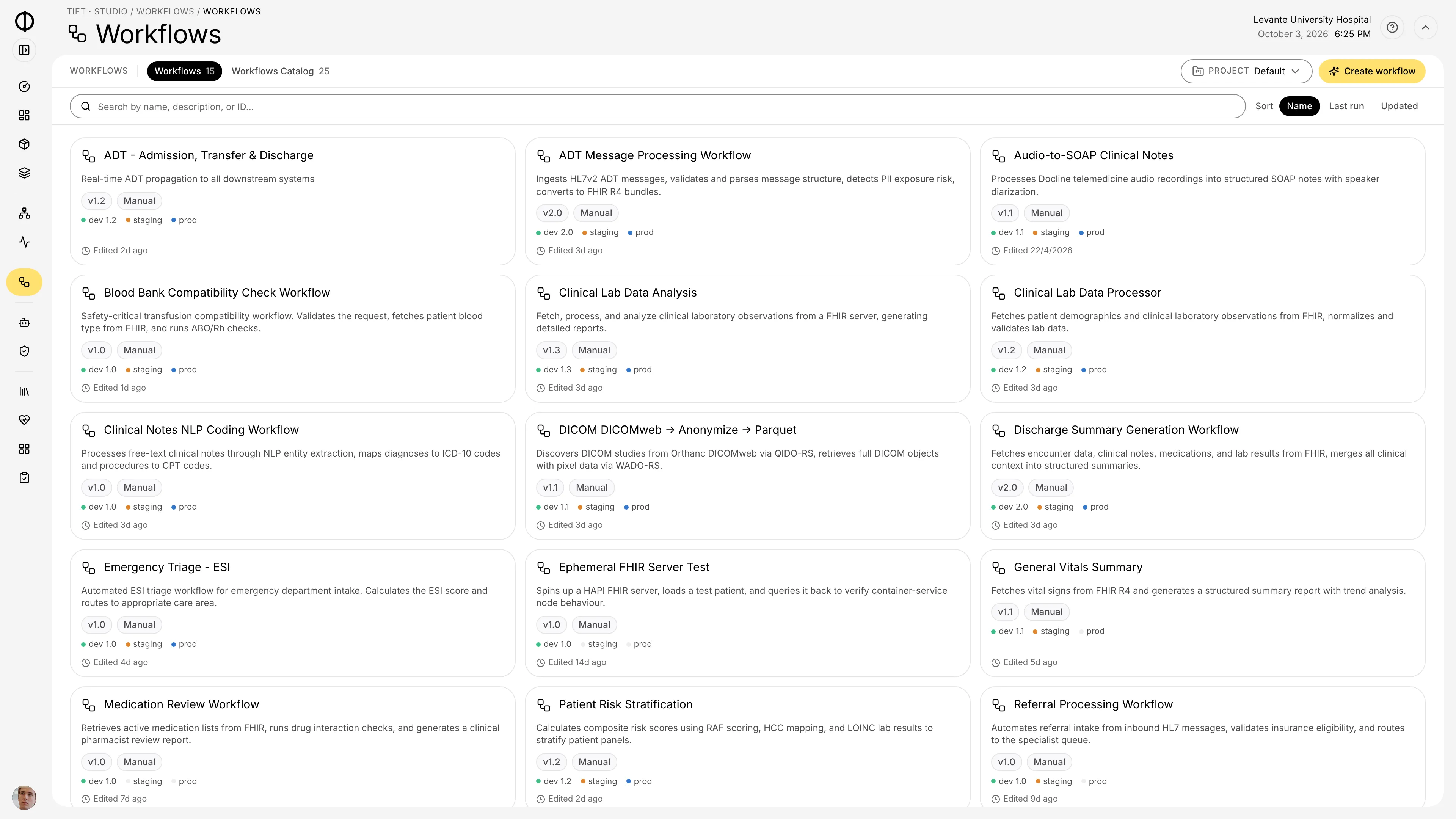
Inspect the workflow version, inputs, outputs and step log of each run. Retries, timeouts and circuit breakers contain failures, and any run can be replayed.
Read the docs (opens in a new tab)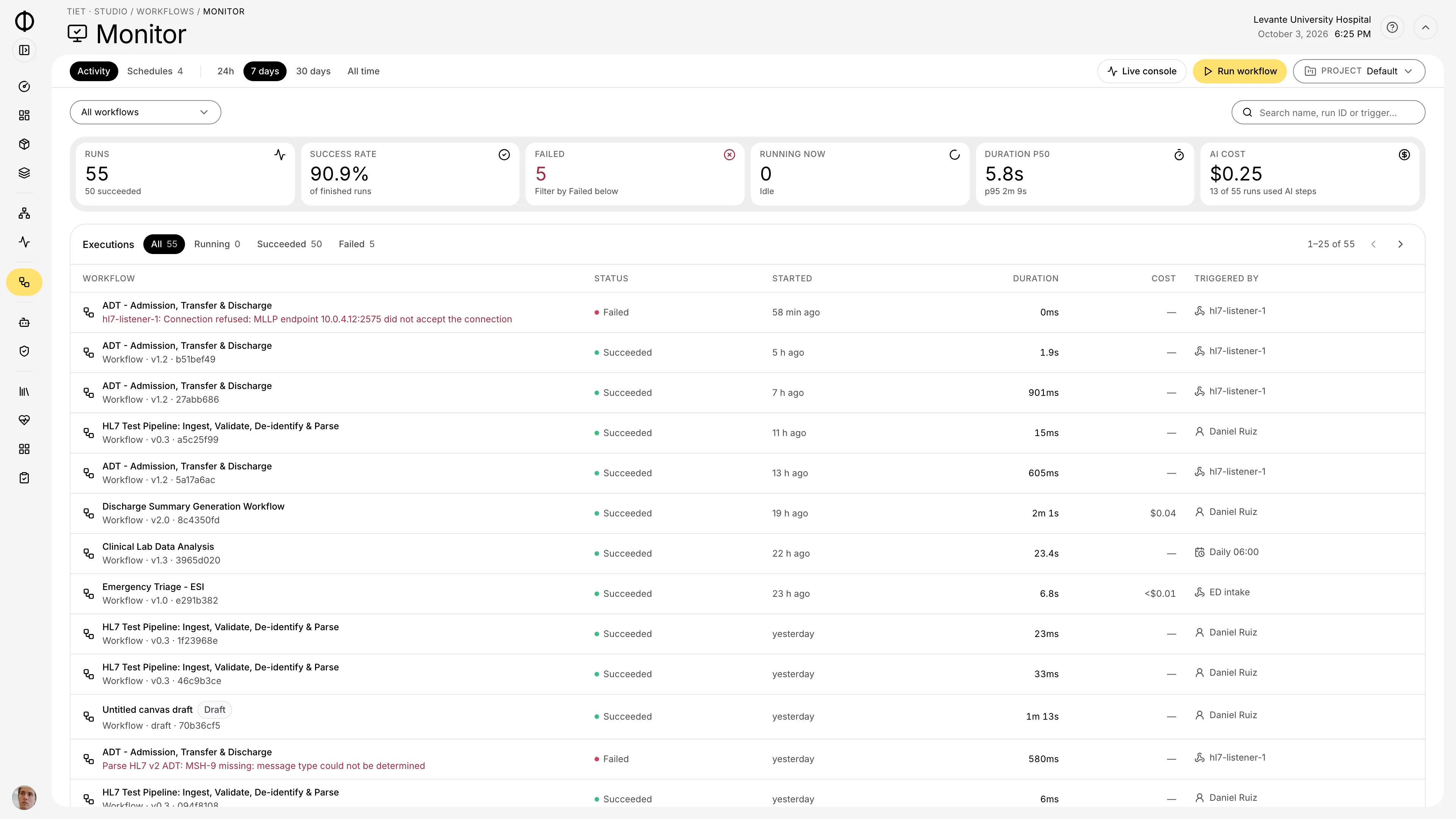
Classify and extract any referral document, check coverage and prepare the routing. A person confirms.
Assemble the evidence, check payer rules and draft the submission for your team to approve.
Run a fixed, versioned pipeline that drafts the discharge summary and holds automatically on any deviation.
Validate admission, discharge and transfer events, check PHI and convert them to FHIR with care-team notifications.
Convert cohorts to OMOP CDM 5.4, de-identify them and export them for research.
Check eligibility and coverage across systems and route the exceptions to your team.
You build workflows on a visual canvas from ready-made healthcare nodes, so most of the work is configuration, not code. Your IT team connects the source systems, and developers can call approved workflows through the API.
An example plan runs six weeks: define, connect, compose, validate and go live, each with an exit criterion. Your source access, review and release readiness set the actual schedule.
Sandbox policies apply at every node, agent and tool boundary, and approval gates hold consequential steps until a person signs off. Agent configuration and AI-system risk are governed in Tiet · Agentic.
No. Tiet · Studio is workflow infrastructure with no medical purpose on its own. The intended purpose of each workflow you configure determines its regulatory route, and health institutions can build and use their own workflows under Article 5(5) of the EU MDR where its conditions are met.

We use strictly necessary cookies to run tiet.ai and, only with your consent, analytics to improve it. You can accept all, reject non-essential, or choose by category. Read our Cookie Policy.
Strictly necessary cookies are always on. Turn a category on to consent, or off to withdraw. Read our Cookie Policy.
Needed to run the site: security, load balancing and remembering your cookie choices.
Remembers choices you make to improve your experience. None are in use at the moment.
Measures how the site is used so we can improve it, set only with your consent.
| Name | Provider | Purpose | Category | Duration |
|---|---|---|---|---|
| cookieConsent | TietAI | Remembers your cookie choices | Strictly necessary | 12 months |
| Google Analytics | Audience measurement, set only with consent | Analytics | See Cookie Policy |
 ISO/IEC 27001Certified
 Certified · High